NATO Nuclear Augmentation and Arms Control Diplomacy
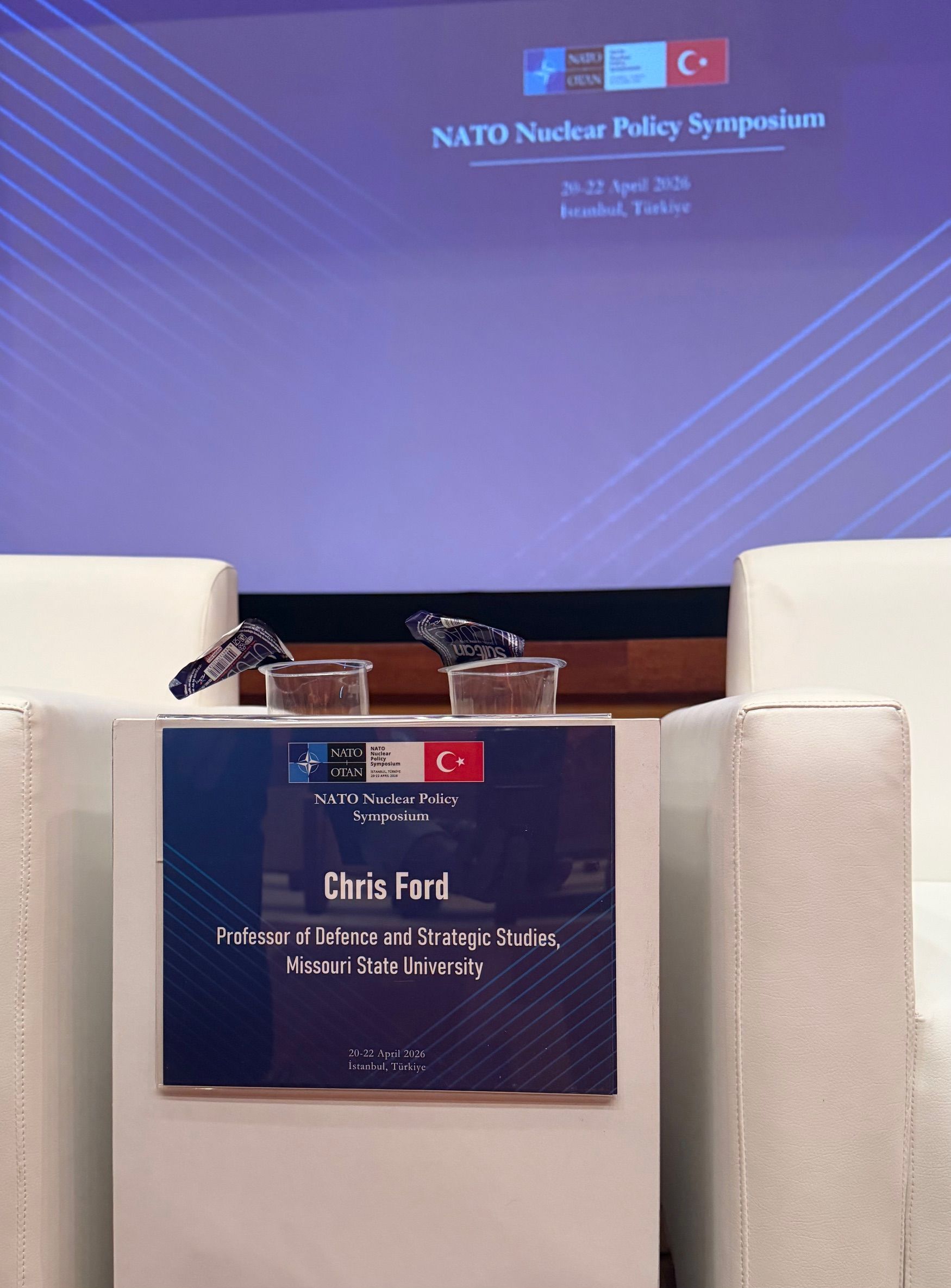
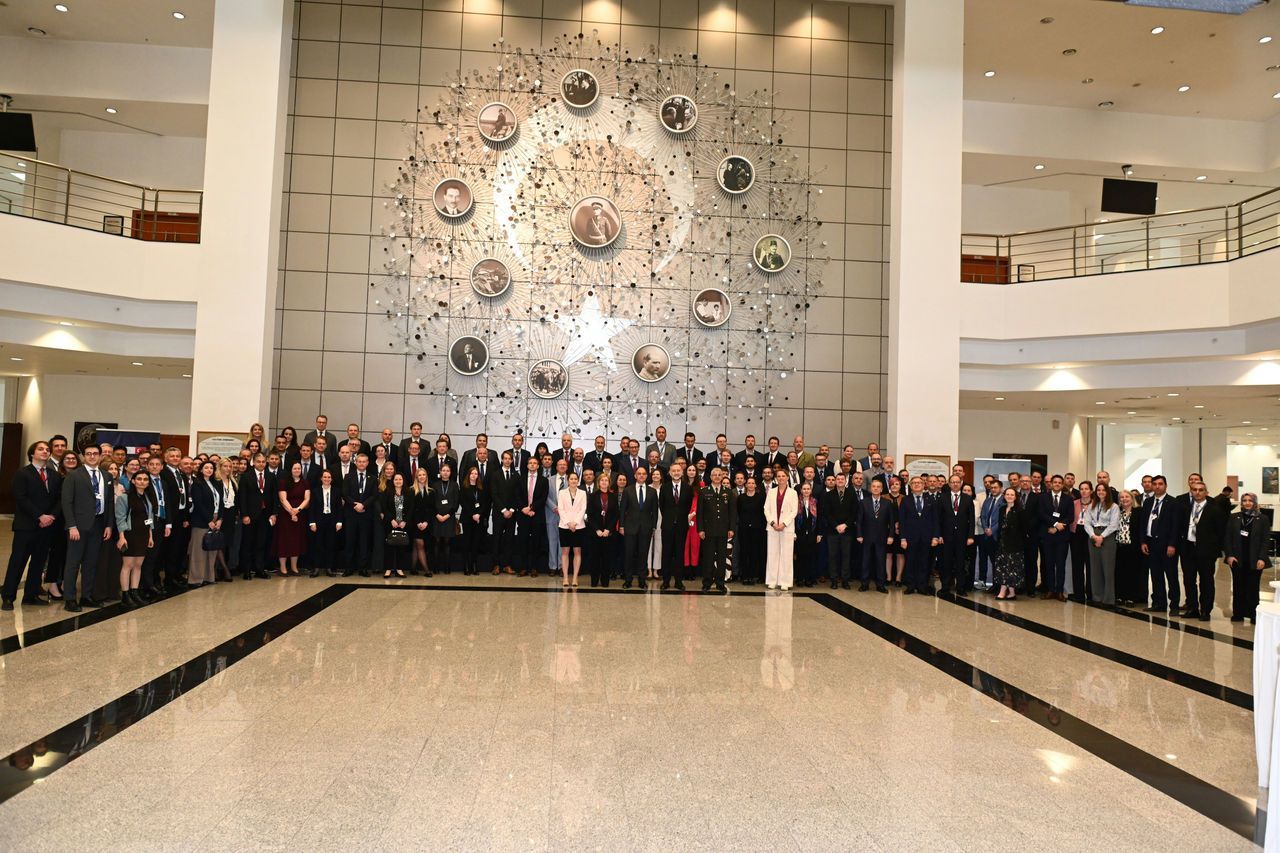
Below are the remarks Dr. Ford delivered on a panel at the NATO Nuclear Policy Symposium in Istanbul, Türkiye, on April 21, 2026.
Thank you for inviting me. It is indeed challenging to go last on this panel, as many wise things have already been said, but – with the usual caveat that these comments will be my own personal views and don’t necessarily represent those of anyone else – I’m pleased to offer my thoughts on the implications of NATO nuclear policy on arms control, disarmament, and nonproliferation (ADN) issues.
NATO has a strong commitment to arms control, and there’s nothing wrong with that: both substantively and diplomatically, it is quite right for NATO to continue this commitment.
And I do think there is still both room for and need for some sort of reciprocal risk-reduction measures – a type of arms control that can include things such as missile launch notifications, various other sorts of reciprocal transparency and data exchanges, crisis communications linkages, nuclear test-site visits, and dialogue offering more clarity and honest exchange about nuclear weapons-related doctrines, concepts, and thinking. Accordingly, NATO should keep encouraging negotiations to this end.
That doesn’t mean I’m too optimistic we’ll actually see such agreements anytime soon, of course. When I was acting as U.S. Under Secretary of State for Arms Control and International Security a few years ago, I saw first-hand the bad faith with which Russia approaches arms control compliance, as well as how disinterestedly scornful China is about any arms control negotiating whatsoever.
So I’m not holding my breath for results, but NATO is right to support risk-reduction-focused arms control.
I also very much hope that NATO will continue its strong support for the Nuclear Nonproliferation Treaty (NPT), the latest Review Conference for which kicks off in just a few days’ time. For more than a half century, the NPT regime has done a great deal to keep the nuclear risks and dilemmas the world faces from becoming very much worse, and it still deserves our collective support.
Nevertheless, I hope you won’t take it amiss when I say that when it comes to traditional, “stereotypical” arms control – the sort that aspires to achieve actual limitations on or reductions of nuclear arms – this is not the right time for NATO to support that. Regrettably but unavoidably, our alliance is in a period in which we now actually need more such arms rather than fewer.
Today, in fact, Europe is perhaps less in need of nuclear arms limitations than at any time since I was a schoolboy. Recent threats have created circumstances in which limitations on nuclear arms in the European theater are probably now actually against NATO’s security interests to a degree they have not been at least since the late 1970s – back when the Soviet Union and its friends were trying to persuade us not to deploy our so-called “Euromissiles” in response to Moscow’s deployment of the infamous Soviet SS-20s.
Then, as now, the push for immediate arms control limits is thus not something to be embraced but rather something actually to be resisted in the name of our collective national security interests. As I’ve said repeatedly in recent years, I do think there still may be a path forward to meaningful limitation-focused arms control, but if there is, that path lies first through the augmentation of Western capabilities.
As for diplomacy, the right diplomatic posture on ADN issues flows naturally from having the proper understanding of the relationship between ADN and security policy in the first place. Specifically, however much arms control enthusiasts are sometimes reluctant to admit this, it the proper role of ADN is to serve security interests, rather than for security policy to be oriented toward making ADN agreements possible.
This means that policy wisdom starts not with an a priori desire for arms control per se, and an effort to figure out how to get such deals, but instead with a clear conception of one’s key security interests – interests that ADN measures may, or may not, actually be useful in protecting and advancing at any given point in time.
That’s why I think that some risk-reduction measures are still advisable. Risk-reduction steps such as launch notification agreements, for instance, can reduce the risk of dangerous misapprehensions without keeping parties from developing the capabilities they need for their own defense. By the same token, improved clarity about nuclear doctrines and thinking can reduce misunderstandings without strategic cost.
At the right time, and done right, arms limitations can also enhance our security – such as by constraining adversary capabilities we find particularly threatening or destabilizing, or helping protect the possession of capabilities we badly need. In times of strategic competition, moreover, arms control diplomacy can even be approached competitively: a tool that can not only be used for direct security benefit but that can also be weaponized for diplomatic advantage.
But arms control is not always beneficial, and today, unfortunately, I fear actual arms limitations are not in NATO’s security interest right now. Prior decades of Western restraint in the European and Indo-Pacific theaters have helped lead to dangerous and potentially deterrence-imperiling nuclear imbalances in favor of Russian and Chinese revisionist predators – states that have armed and equipped themselves for coercive nuclear bargaining with lots of theater-class weaponry, and who use such coercion in support of strategies of belligerent territorial expansion.
Today, in Europe, NATO faces a huge threat from a diverse array of Russian theater-class nuclear capabilities – truly, as I like to say, a sort of “Swiss Army knife” arsenal that provides a nuclear tool for nearly any occasion, large or small. Moreover, Russian strategy and doctrine emphasize the use of such nuclear tools for coercive bargaining, a dangerous choice that we have inadvertently encouraged them to make by not having a sufficient range of countervailing tools ourselves.
In the face of these threats, NATO security is probably more at risk right now from having too few nuclear systems than it is from having too many. The Alliance needs to be able to answer such threats: to counter Russian coercive bargaining with a flexible range of options of our own, and to prepare ourselves for the many potential challenges of “escalation management” in time of crisis or conflict.
And that’s critical background for the question you have asked me: “Should NATO consider the views and likely reactions of adversaries, competitors, non-aligned states, and partners when adjusting its nuclear posture?”
My answer is “yes.” But don’t misunderstand what I mean by “considering” such views. First of all, if NATO’s adversary Russia doesn’t like what the Alliance does to upgrade its capabilities in response to these deterrence shortfalls, that isn’t a “bug” but rather a “feature.” Of course they won’t like what we do to fix the deterrence problem we face as a result of their force posture advantages! Moscow’s criticism of NATO plans is thus less likely to be a sign of those plans’ unwisdom than it is to be a sign that we’re doing precisely what is needed.
Moreover, when I talk about “considering” the views of third-parties, I mean that NATO should engage openly and honestly with them, explain its views to them, and listen seriously and sincerely to their perspectives.
But that is not at all the same thing as allowing third-party views to delay, impede, or – God forbid! – veto NATO doing what its members need to do in order to safeguard their security in the face of Russian threats. NATO should absolutely not allow third-party views to push the Alliance off the course it needs to be on.
Contemporary Russian threats create potentially existential dilemmas for multiple NATO members, and we shouldn’t mince words about this. We should consult our friends conscientiously, but meeting the threats our Alliance faces is not optional.
Indeed, meeting those threats is a profound strategic and moral duty for an alliance pledged to the noble goal of collective security against aggression in an otherwise anarchic world. It would be both dangerous and ignoble to continue failing to meet them.
So as we act to meet those threats, we should be proud – and not at all apologetic or reticent – about doing so, and our diplomacy should reflect this.
Thanks for having me here to Istanbul.
—Christopher Ford