On Nuclear Testing and Outer Space Security
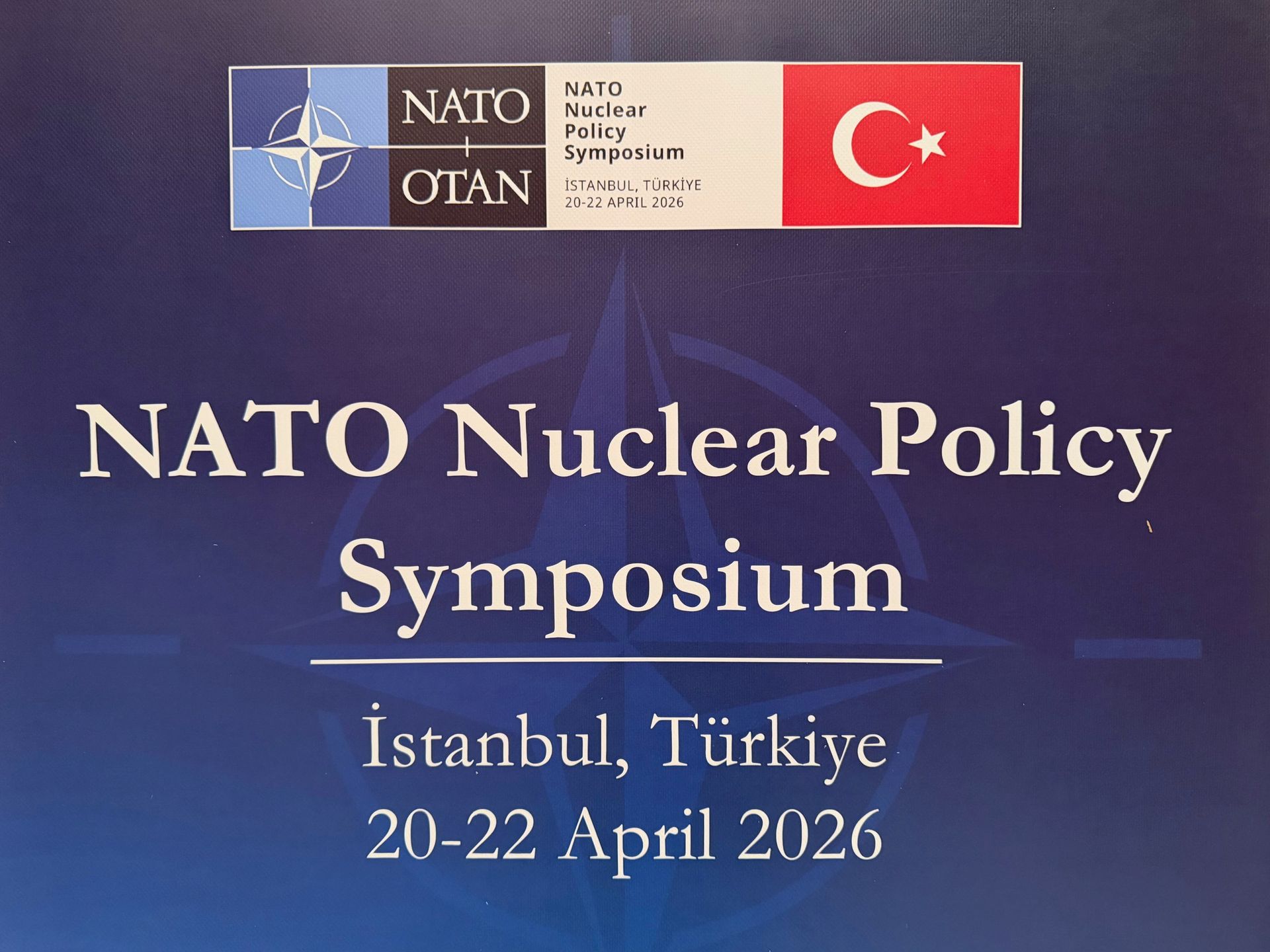
Below are the prepared remarks on which Dr. Ford based his comments at a meeting in Lausanne, Switzerland, on April 18, 2026, discussing U.S.-Russian relations after the expiration of the New START agreement.
Good morning, and my apologies that airline delays kept me from attending yesterday’s discussion. As we continue our exploration here in Lausanne of Post-New START U.S.-Russian relations, however, I’m pleased to be able to offer some thoughts on nuclear testing questions and arms competition in Outer Space. As always, my comments will represent only my personal views, and won’t necessarily reflect those of anyone else, but I hope they will provide some useful context nonetheless.
Nuclear Testing
On the subject of testing, I’ll keep my comments brief, as I recently wrote an essay on this topic that was published last month by INHR, and to which I’d be happy to refer you. There, I focused upon very specific new U.S. allegations that China has engaged in secret low-yield nuclear explosive testing. That represented important new information, which the Second Trump Administration had then just declassified and made public.
With respect to Russia, however, reports of such secret nuclear testing are unfortunately not news. As we made clear in the First Trump Administration in the State Department’s annual report on arms control, nonproliferation, and disarmament compliance in 2020, Moscow has been engaged in such activity for a long time. Despite Russia’s claimed moratorium on nuclear explosive testing, we noted, it has since 1996 engaged at various points in “supercritical or self-sustaining nuclear experiments.” These small secret tests, moreover, enhanced “Russia’s development of new warhead designs” as well as its “overall stockpile management efforts.”
With the tribute that vice pays to virtue, of course, both China and Russia have sought to conceal this testing – apparently keeping these events below the threshold that would have permitted international sensors such as the Comprehensive Test Ban Treaty Organization’s International Monitoring System from detecting them or identifying them as nuclear tests – and they have predictably denied the accusations U.S. officials have made on the basis of intelligence information. But the issue of nuclear testing has indeed now arisen between all three powers for the first time since the 1990s.
In response to U.S. discovery of this activity, in fact, President Trump declared last year that in light of what our strategic adversaries have been doing, the United States would resume testing on an “equal basis” with Russia and China. “That process,” he claimed, “will begin immediately.”
Testing thus represents a new irritant in the relationship between the three biggest nuclear powers. It is not only, however, a new arena for possible arms competition; it also might be a potential opportunity for transparency-focused arms control. Indeed, U.S. officials have periodically proposed negotiations aimed at developing nuclear test-site transparency protocols – something I recall we suggested at least as far back as the George W. Bush Administration, when I was first at the State Department, when we considered having Under Secretary of State John Bolton himself head a delegation for such a mission. So far, however, just as one would expect from powers that are indeed conducting small secret tests and wishing to hide their tracks, Moscow and Beijing persist in their denials and have not accepted such test-site transparency. Perhaps their perspective will change if and when the United States begins doing the same kind of small tests they have been doing, but it hasn’t done so yet.
Outer Space
Another worsening problem between the United States and Russia and China relates to placing weapons, and even nuclear weapons, in space. This is a concern that became particularly acute several years ago when – despite the Kremin’s remarkable chutzpah in simultaneously promoting a “No First Placement of Weapons in Outer Space” resolution in the United Nations – Russia began testing on-orbit kinetic-kill satellite weapons.
This began at least as early as 2017. As I pointed out when acting as Under Secretary of State for Arms Control and International Security in 2020, the Russian spacecraft Cosmos 2519 deployed a sub-satellite, Cosmos 2521, that displayed the ability to maneuver around another satellite in space. More remarkably, that smaller satellite Cosmos 2521 itself launched an additional object into space, Cosmos 2523 – at a relative speed of about 250 kilometers per hour – straight off into space. As I pointed out in 2020, this means that “Cosmos 2521 demonstrated the ability to position itself near another satellite and fire a projectile.” (Those interested in such things can apparently actually openly see in the orbital data maintained by the Space-Track.org website.) Later, the satellite Cosmos 2542 demonstrated “similar capabilities as Cosmos 2519.” Russia has thus had on-orbit kinetic-kill ASATs for years.
Not one to be left behind, China – despite pious professions of belief in the importance of not “weaponizing” space – has also been developing a whole new range of military counterspace capabilities, including “directed-energy weapons, satellite jammers, and antisatellite (ASAT) missiles,” as well as a new geosynchronous maneuvering capability that “could permit China to direct its spacecraft to rendezvous and interfere with U.S. early warning satellites.” Indeed, it is now reported that U.S. and Chinese satellites are today routinely engaged in a sort of “dogfighting” as they maneuver around each other in anticipation of potential future in-space combat.
And things only got worse recently. Beginning in 2024, U.S. officials began to warn of what they say is Russia’s development of a space-based anti-satellite system employing an actual nuclear weapon in orbit – in ways that would clearly violate the 1967 Outer Space Treaty, in addition, of course, to posing a catastrophic danger to essentially allcountries’ space assets. These concerns recently became more concrete with explicit warnings from the head of the U.S. Space Command that the Russians are indeed “thinking about placing on orbit a nuclear ASAT weapon.”
Is there, then, any prospect of arms control in outer space? As I pointed out in my State Department paper on this topic in 2020, expert-level discussions on transparency and confidence-building measures (TCBMs) in outer space go back at least to 1990, and in 1993 a group of governmental experts (GGE) sponsored by the U.N. Secretary General produced an extensive report on the topic. They concluded that TCBMs were possible in the space domain. A subsequent GGE report in 2013 recommended that countries publicize and share information on their national space policies, on developmental and operational space systems, on each country’s principles and goals in the space arena, and on what objects they had placed in space and their general function; it also called for the improvement of norms of behavior related to space flight safety and risk reduction.
It was Obama Administration policy, for instance, to seek an International Code of Conduct for Outer Space Activities. Republican administrations have tended to be a bit more wary of space arms control, in part for reasons of verification - not least because at the tremendous relative velocities of all objects up there, anything that can maneuver at all is a potential “weapon” analogous to an Iranian Shahed “kamikaze drone.”
Nevertheless – and even if it might be a bit late to preclude stationing weapons in space, partly because of ongoing Russian and Chinese activity in this regard and partly because the American “Golden Dome” project may still contemplate the possibility of space-based systems for boost-phase interception of enemy ballistic missiles – there may well be useful things to be done in terms of space-related TCBMs. Even during the Cold War, for instance, the United States and the Soviet Union were able to agree to code-of-conduct-type measures intended to reduce escalation risks, such as the Incidents at Sea Agreement of 1972 (INCSEA). Nor can it be said that Russia and China today are philosophically opposed to TCBMs, for they themselves have agreed to a bilateral missile launch notification agreement. (They are opposed, apparently, only to such agreements with their adversaries – that is, where such deals would do the most good.)
At least when I was in the First Trump Administration, at any rate, we were certainly interested in setting “better normative expectations in outer space.” We sought opportunities
“to work constructively with their counterparts in other spacefaring nations to develop approaches to outer space norms that will help improve predictability and collective ‘best practices’ in the space domain … [that will be] complementary to the existing legal regime. … Why not, for instance, start … [with] acknowledging that there’s nothing special about outer space that would make it an arena of warfare different from any other with regard to the applicability of International Humanitarian Law (IHL) – and that, therefore, traditional IHL principles of humanity, necessity, proportionality, and distinction between combatants and non-combatants apply in outer space? … [And with] articulating a nonbinding norm against peacetime attacks upon critical civilian infrastructure that is largely owned and operated by the private sector? And … [i]s it possible to articulate a standard for what constitutes responsible – and thus, impliedly, irresponsible – behavior in proximity operations?
“… [P]erhaps we could [also] consider whether it would be beneficial to establish a norm that it is irresponsible to conduct on-orbit experiments such as the ones Russia did recently in close proximity to another country’s satellites without prior consultations. That sort of behavior is easy to detect. The establishment of such a norm, coupled with the fact that this sort of orbital ‘pattern of life’ is increasingly easy to detect and assess, would enable the international community to develop a response – and perhaps we could thereby help deter such irresponsible behavior.”
Notably, we also engaged then in direct space security discussions with the Chinese, holding a U.S.-China Space Security Exchange (SSE) dialogue as an outgrowth of the broader Defense and Security Dialogue. At one point Russian Deputy Foreign Minister Sergei Ryabkov and I met and also agreed to restart a space dialogue between our two countries, for it had faltered as a result of the first phase of Vladimir Putin’s war against Ukraine.
With China having become progressively less cooperative over time, and with relations with Russia still in a bad state today as a result of the second phase of Putin’s war of annexation, the prospects of an immediate resumption of such engagements may be low. But it’s worth remembering that this history of just a few years ago shows that some such things are at least possible.
—Christopher Ford